Crown, veneer or zirconia: how to choose a tooth restoration
 A veneer is a thin ceramic shell that restores the appearance of a front tooth with minimal preparation. A crown covers and protects a badly broken-down tooth completely. "Zirconia or eMax" is a separate question — the choice of material, by strength and translucency. Which of these you need is decided by the prosthodontist after an examination and a digital scan.
Veneer or crown — what is the difference
These are restorations with different purposes, not a dearer and a cheaper version of the same thing. The main difference is how much tooth has to be removed, and why.
A veneer is bonded only to the visible surface of the tooth. Between 0.3 and 0.8 mm of enamel is removed and the tooth usually stays alive. A veneer corrects colour, shape, small chips and slight misalignment — it is chiefly a cosmetic solution for the smile zone.
Crown covers the tooth on every side. It is chosen when a tooth is badly broken down, has had root canal treatment, or needs protecting from further damage. The preparation is deeper: 1.0–2.0 mm.
The guiding rule of prosthodontics is: do no harm. If a tooth is healthy and strong, a veneer preserves as much of it as possible. Crowning a healthy tooth purely for appearance removes far too much.
Zirconia or eMax — choosing the material
Once it is clear whether you need a veneer or a crown, a second question arises: what to make it from. There is no universally best material — only the right one for the situation.
Zirconia (zirconium dioxide)
The strongest option: 900–1200 MPa in flexure. Metal-free, so no dark line at the gum, and biocompatible. It withstands chewing loads, which makes it the choice for back teeth and for patients who grind their teeth. A zirconia crown starts from UAH 7,200 and lasts 15–20 years.
eMax (lithium disilicate ceramic)
Strength of 400–500 MPa, but the greatest translucency: such a crown or veneer is almost impossible to tell from a natural tooth. It is the material for front teeth with high aesthetic demands. An eMax crown starts from UAH 12,200, an eMax pressed-ceramic veneer from UAH 17,600.
Feldspathic porcelain
The most natural appearance, thanks to a ceramist layering it by hand, but the lowest strength (60–90 MPa). Only for front teeth with the very highest aesthetic demands — from UAH 14,000.
| Criterion | Zirconia | eMax | Feldspathic porcelain |
|---|---|---|---|
| Price (crown) | from UAH 7,200 | from UAH 12,200 | from UAH 14,000 |
| Flexural strength | 900–1200 MPa | 400–500 MPa | 60–90 MPa |
| Translucency / naturalness | Good | Excellent | The highest |
| Back teeth | Excellent | Good | Not recommended |
| Bruxism | Withstands it | With caution | Not recommended |
| Lifespan | 15–20 years | 12–17 years | 10–15 years |
How much tooth is removed, and how long it lasts
The general rule is that the less preparation, the better for the tooth. So where the indications are equal, a veneer always beats a crown.
| Restoration | Tooth removed | Lifespan |
|---|---|---|
| eMax veneer | 0.3–0.5 mm | 10–15 years |
| Zirconia veneer | 0.5–0.8 mm | 15–20 years |
| eMax crown | 1.0–1.5 mm | 12–17 years |
| Zirconia crown | 1.5–2.0 mm | 15–20 years |
And if the tooth is on an implant
Zirconia crowns are placed on implants too, on a custom abutment, using a digital impression rather than silicone. At Houston a crown on a Megagen implant costs UAH 16,100 and on a Straumann NeoDent UAH 18,200. It is usually fitted three to six months after surgery, once osseointegration is complete. Screw retention means the crown can easily be removed and replaced if ever needed.
Advice for patients
A short note on how to approach the choice of restoration before you decide in the chair.
What is worth doing
- Start with a consultation and a digital scan — ask to see a 2D/3D mock-up of the future smile before treatment begins.
- If the tooth is healthy and the problem is purely cosmetic, consider a veneer rather than a crown.
- For back teeth and for bruxism, choose zirconia.
- For front teeth where naturalness matters most, choose eMax or feldspathic porcelain.
- Look after your restorations with a professional cleaning every six months.
What is not worth doing
- Crowning a healthy tooth purely for appearance — it removes too much.
- Using veneers to mask noticeably crooked teeth — orthodontics first, restoration afterwards.
- Cracking nuts or bones, or opening bottles with your teeth — it damages crowns and natural teeth alike.
- Putting off replacing an old crown when pain, odour or looseness appears.
- Choosing a material by price without an examination — the decision depends on the tooth and the load it carries.
The doctor's view
Frequently asked questions
Which lasts longer, a veneer or a crown?
With a good material and proper care the figures are close: veneers last 10–20 years, crowns 12–20. Longevity depends more on the material and the load than on the type of restoration. Zirconia, whether in a veneer or a crown, is the most durable option at 15–20 years.
Zirconia or eMax for front teeth?
For the smile zone, where naturalness matters most, eMax is usually chosen for its better translucency. Zirconia suits cases needing extra strength (bruxism, for instance) or bridges. The doctor makes the final choice for your case.
Does a tooth hurt under a crown?
Mild sensitivity for two to five days after fitting is a normal reaction, especially when the crown sits on a live tooth. If the pain grows or has not gone within a week, come in for a check-up. Replacing a crown is done under anaesthetic and is painless.
How many veneers are needed for a natural-looking smile?
Usually six to ten on the upper jaw — that is the smile zone. Placing only two to four on the central teeth can leave a visible contrast with their neighbours. At the consultation the doctor shows a mock-up so that you see the result before treatment starts.
How much does a crown or a veneer cost at Houston?
A zirconia crown from UAH 7,200, eMax from UAH 12,200, feldspathic porcelain from UAH 14,000. An eMax veneer from UAH 17,600, a zirconia veneer from UAH 14,000. A crown on an implant: Megagen UAH 16,100, Straumann UAH 18,200. The exact figure follows an examination, since it depends on the number of units and the state of the teeth.
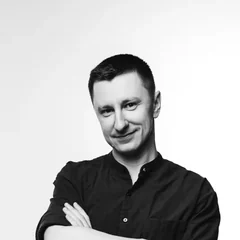
Prosthetic work on a digital protocol: crowns, veneers and restorations on implants. A do-no-harm approach — preserving as much tooth as possible and agreeing the result through a mock-up before treatment begins.
Doctor's profile →All articles by this doctor →Clinic on Instagram ↗Questions about prosthetic work?
Booking, reminders and answers to your questions all live in the clinic's Telegram bot. Bonuses for every treatment are credited automatically.
Or book by phone 067 478 88 78
Book a consultation with the prosthodontist
We will show you a digital mock-up and choose the material for your case — before treatment begins.
Book now