Dental implants in Dnipro: All-on-4, All-on-6 or All-on-X — how to choose
 If all or most teeth in the jaw are lost, fixed implant-supported prosthetics restores both function and aesthetics in a relatively short time. The most common protocols are All-on-4, All-on-6 and All-on-X. In short: the difference between them is in the number of implants and the indications based on bone condition, and the final plan is always determined from 3D CT data, not in advance.
What a fixed bridge on implants is
This is a full arch of the jaw resting on several implants that the patient can't remove themselves. The construction is stable, doesn't rub or come loose while talking or eating, and the chewing load is transferred through the implants to the bone, which slows its further loss — unlike a removable denture, which sits on the gums and doesn't give the bone this kind of load.
Choosing an All-on protocol over individual implants for each tooth is usually justified when many teeth are missing: placing 8-10 separate implants is more expensive and more traumatic than distributing the load across 4-6 abutments for the whole jaw at once. The specific protocol — All-on-4, All-on-6 or All-on-X — isn't chosen at the patient's preference, but based on bone condition, which is only visible on 3D CT. The aesthetic result is mostly the same either way: the difference between protocols isn't in how the teeth will look, but in how many abutments and how much bone preparation are needed.
All-on-4 — when four implants are enough
The full arch rests on 4 implants positioned to evenly distribute load even with limited bone volume — the two back implants are often angled to work around areas with a bone deficit and avoid an additional sinus lift. The protocol suits cases with sufficient bone volume and by default uses Megagen ST implants.
In practice, this means: if 3D CT shows sufficient height and density of bone in the front and side sections, there's no need for additional bone preparation via a sinus lift or bone grafting, and the surgical stage can be planned right after diagnostics. This is the shortest route to a finished arch of all three protocols. At the same time, this is exactly why an inexperienced approach sometimes tries to "fit" any case into All-on-4 for the sake of speed and a lower price, even when the bone condition would actually suit a protocol with more abutments.
As a guide: the surgical stage for All-on-4 — from UAH 50,000. This is the cost of placing the 4 implants themselves; prosthetics are billed separately and added to this amount at the next stage of treatment.
All-on-6 — greater stability
Six implants distribute chewing load better over a larger area of bone, so this protocol is more often recommended for moderate bone atrophy or when a longer, heavier bridge is planned. A greater number of abutments also means a certain margin of strength: if issues arise with one implant down the line, the load is redistributed to the others until the situation is resolved.
This protocol is also chosen when the CT shows bone is present, but with a smaller margin than would be ideal for long-term stability on just four abutments. The price difference between All-on-4 and All-on-6 in money terms isn't as large as it might first appear: two extra implants cost less than repeat treatment if too few abutments end up overloaded. What matters here isn't the wish to save money at the start, but a realistic forecast of how the construction will behave under load over years, not months. For patients with bruxism or a habit of chewing hard food often, the dentist more often recommends six abutments instead of four.
As a guide: the surgical stage for All-on-6 (6 Megagen ST implants) — from UAH 75,000, not including prosthetics.
All-on-X — the individual protocol
"X" stands for an individual number of implants, determined from 3D CT data rather than a fixed figure of 4 or 6. The protocol is used in more complex cases: pronounced bone atrophy, the need to combine angled and straight implants, or when the patient deliberately chooses a premium system. The base systems here are Nobel Biocare and Straumann NeoDent.
Nobel Biocare and Straumann NeoDent have a broad evidence base and high component precision, which matters most in complex cases, where the parts of the construction need to fit together tightly. In such cases even a small component inaccuracy can complicate fixation of the whole construction across several abutments at once. That's why, in complex cases, saving money by choosing a cheaper implant system often turns out to be a false economy: the risks concentrate exactly where the cost of a mistake is highest, and correcting an already-finished construction costs substantially more than the price difference between systems at the start.
The cost of All-on-X is calculated individually after consultation and CT, since it depends on the number of implants, the system chosen and the extent of bone preparation required. That's why it's impossible to quote an approximate "from" price for this protocol without a personal examination.
Temporary and permanent bridge: two separate stages
A temporary bridge is fitted straight after surgery — for All-on-4 this is a PMMA bridge from UAH 58,650, for All-on-6 — a construction on a bar from UAH 81,600. It lets you chew and look natural straight away while osseointegration is under way, but it isn't designed for lifelong use.
The permanent bridge — zirconia on a titanium bar, from UAH 209,100 — is made once the implants have fully integrated, when the bone has completely fused with their surface. Moving from the temporary construction to the permanent one is a separate stage of treatment, not an automatic swap on a schedule: the dentist confirms implant stability before taking impressions for the permanent bridge. It's not worth rushing into the permanent bridge before osseointegration is complete, even if the temporary construction looks and functions quite satisfactorily.
Prosthetics prices are calculated at a rate of UAH 51 per euro, since the components for these constructions are imported, and that's exactly why their cost is tied to the exchange rate rather than a fixed hryvnia amount for the whole treatment period. The cost of each stage is fixed by its prepayment.
All-on-4
4 Megagen ST implants, surgery from UAH 50,000, PMMA temporary bridge from UAH 58,650. Optimal when there is sufficient bone volume at the key support points.
All-on-6
6 Megagen ST implants, surgery from UAH 75,000, temporary bridge on a bar from UAH 81,600. Greater stability margin, more often chosen for moderate bone atrophy.
Navigation-guided implant placement: precision for a complex protocol
Using a surgical guide made from 3D CT data, implants for All-on protocols are placed in pre-planned positions with precision of up to 0.1 mm. For a construction on 4-6 implants, this matters especially: a positioning error in even one implant can complicate the fit of the temporary or permanent bridge across all abutments at once.
The cost of a navigation surgical guide (3–5 units) is UAH 6,200. This means less trauma during surgery and a more predictable result — exactly what's needed when the operation involves several implants at once and immediate loading with a temporary bridge is planned on the day of the procedure.
Without a surgical guide for implant positions, the surgeon adjusts during the operation itself, guided by visible anatomy — this is also an acceptable approach in experienced hands, but a guide removes some of the unpredictability before the patient even lies down on the operating table. For a single implant the difference isn't always critical, but for a protocol involving several abutments at once it adds up and affects the fit of the whole construction.
When bone grafting or a sinus lift is needed
Not every case can be done without additional bone preparation. A sinus lift (open or closed, UAH 11,400-16,200) is needed when there isn't enough bone height under the sinus in the upper jaw. This need for preparation is one of the reasons why, under the same All-on-4 protocol, the final price and treatment time differ between patients.
Angled implants, typical of All-on-4 and All-on-6, in some cases make it possible to work around exactly the areas where there's least bone and avoid a sinus lift altogether — this is one of the advantages of the protocol over placing a single implant in the same area.
But this doesn't always work: with a pronounced bone deficit, even angled implants can't save the situation, and bone preparation still has to be carried out — the decision is made individually from 3D CT, not by a general rule. Patients should factor this scenario into the plan from the start, rather than treat additional bone preparation as a surprise partway through treatment. This also affects timing: a sinus lift sometimes adds a few months of waiting before the implants themselves are placed. Read more about bone grafting and sinus lifts in the article bone grafting and sinus lifts.
What determines the final price
The cost depends on the protocol (All-on-4, 6 or X), the number and system of implants, the need for bone grafting or a sinus lift, and the material of the permanent bridge. So the "from" figures quoted for All-on-4 and All-on-6 cover only the surgical stage, not the total cost of treatment start to finish.
The cost of the temporary and permanent bridge should be added to the surgery from the start — this is the part that most often surprises patients who focused only on the price of the operation. It's worth planning a realistic budget for the whole treatment cycle from the outset, not just the first visible stage. A written plan broken down by stage — surgery, temporary bridge, permanent bridge — solves this problem right at the consultation, before treatment even begins.
The exact amount, including any additional costs for bone preparation, is given after the consultation and 3D CT — diagnostics can be done at the centre Houston 3D. A detailed breakdown of everything that makes up the price of a single tooth implant — in the article how much dental implantation costs.
Recovery and the first year with an implant-supported bridge
Osseointegration after implant placement usually takes 3-6 months, slightly faster in the lower jaw. Throughout this time the patient uses the temporary bridge, while the dentist monitors healing and the stability of the abutments before moving on to the permanent construction on a bar.
During this period it's worth following the recommendations on load and diet, so as not to overload the newly placed implants before the bone has fully fused with their surface. This is the same principle as for a single implant, just applied to several abutments at once. The temporary bridge lets you eat almost normally, but hard or sticky food is best limited for the first few months, and nuts or crackers avoided altogether until the permanent construction is fitted.
The longevity of the result after an All-on protocol depends on the same factors as for a single implant: hygiene, regular check-ups, not smoking, and control of general conditions such as diabetes. Peri-implantitis remains the main cause of losing support in full-arch bridges too, so the schedule of check-ups after surgery isn't a formality. Read more in the article how long does an implant last.
Warranty and an honest treatment plan
Implant placement at Houston clinic is covered by a 100% warranty, including the All-on-4, All-on-6 and All-on-X protocols. The condition for it to apply is the same as for a single implant — regular check-ups and hygiene after treatment is complete. For a construction on several implants at once, neglecting care is riskier: a problem with one component can affect the fit and stability of the whole bridge.
The final treatment plan, the choice of protocol and the number of implants are determined by the surgeon individually after examination and 3D CT. No protocol is prescribed in advance over the phone or from a description of symptoms — the decision is always based on the patient's specific anatomy, visible on the scan, not an average case from a marketing brochure. This applies to the number of implants, the need for bone grafting, and even the choice between a PMMA or bar-supported temporary bridge. That's why the first step for any patient with missing teeth in the jaw is a consultation and 3D CT, not choosing a protocol yourself by name online.
More on the surgical protocol itself — on the page surgical implant placement. This material is for information purposes only and doesn't replace a dentist's consultation.
Frequently asked questions
What is the difference between All-on-4 and All-on-6?
All-on-4 supports the full dental arch of the jaw on 4 implants and suits cases with sufficient bone volume; the two back implants are often angled to work around a bone deficit. All-on-6 uses 6 implants — a greater stability margin and better load distribution, more often recommended for moderate bone atrophy. The final choice is made based on 3D CT data.
Are teeth in a day possible?
Yes, the protocol involves fitting a temporary fixed construction on the day of surgery, right after the implants are placed. The permanent bridge — zirconia on a titanium bar — is made later, once osseointegration is complete, which usually takes 3-6 months.
How much does implant placement under the All-on protocol cost?
As a guide: the surgical stage for All-on-4 — from UAH 50,000, All-on-6 — from UAH 75,000, All-on-X — calculated individually. Prosthetics are billed separately: a PMMA temporary bridge — from UAH 58,650 (All-on-4) or from UAH 81,600 on a bar (All-on-6), a permanent zirconia bridge on a bar — from UAH 209,100. The exact amount is confirmed after consultation and CT.
Which implant systems does the clinic use for All-on protocols?
By default, All-on-4 and All-on-6 at the clinic are performed with Megagen ST implants. For All-on-X, Nobel Biocare or Straumann NeoDent are more often used — systems with a broader evidence base and high component precision, which matter in complex clinical cases and with angled implants.
What is All-on-X, and how does it differ from All-on-4 and All-on-6?
"X" means the number of implants is determined individually from 3D CT rather than fixed at 4 or 6. The protocol is chosen for pronounced bone atrophy, a combination of angled and straight implants, or when the patient chooses a premium system. The cost is calculated individually after examination.
How much do the temporary and permanent bridge cost?
A PMMA temporary bridge for All-on-4 — from UAH 58,650, on a bar for All-on-6 — from UAH 81,600. The permanent bridge (zirconia on a titanium bar) — from UAH 209,100. Prices are calculated at a rate of UAH 51 per euro. The cost of each stage is fixed by its prepayment.
What is a navigation surgical guide, and why is it needed?
This is a construction made from 3D CT data that helps place each implant in a pre-planned position with precision of up to 0.1 mm. For protocols involving several implants at once, this reduces the risk of error and the trauma of the operation. The cost of the guide (3–5 units) is UAH 6,200.
Is bone grafting needed for All-on-4 or All-on-6?
Not always — angled implants in these protocols often make it possible to avoid zones with a bone deficit without additional preparation. But with a pronounced lack of bone height in the upper jaw, a sinus lift (UAH 11,400-16,200) may be needed. The need for it is determined from 3D CT.
How long does recovery take after All-on-4 or All-on-6?
Osseointegration usually takes 3-6 months, slightly faster in the lower jaw. Throughout this period the patient uses the temporary bridge and chews almost as with natural teeth, while the dentist monitors healing. The permanent bridge is made only once implant stability is confirmed, not on a fixed calendar schedule.
Is there a warranty on All-on-4, All-on-6 or All-on-X?
Yes, implant placement at Houston clinic is covered by a 100% warranty, including the full-arch protocols. The condition for it to apply is regular check-ups and hygiene after treatment is complete, the same as for a single implant.
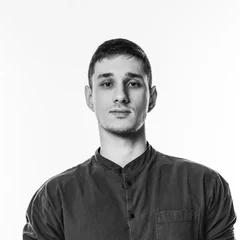
4+ years of practice. Dental implantation, bone grafting, sinus lift, soft tissue grafting.
Doctor's profile →All articles by this doctor →Clinic on Instagram ↗Ask the surgeon a question on Telegram
The receptionist will find a time that suits you. Booking, reminders and questions — in the clinic's Telegram bot.
Or book by phone 067 478 88 78
Find out which protocol suits you
Book a consultation and 3D CT to get an accurate treatment plan under the All-on-4, All-on-6 or All-on-X protocol.
Book now