UAEN
3D imaging
→ Surgery → Fillings → Endodontics → Microscope → Periodontics → Orthodontics → Prosthetics → Whitening
about us contacts careers blog pricing 067 478 88 78 book
Orthodontics · Dnipro

Orthodontics in Dnipro —
straight teeth are about more than looks

A correct bite means healthy joints, gums and teeth for decades to come. Braces or aligners — the orthodontist will choose the method after an examination.

4.6161 reviews on Google
Open every day: Mon–Sat 9:00–19:00 · Sun 10:00–18:00
Orthodontist consultation — UAH 690: examination, bite diagnostics and treatment plan.
Children and adults
Braces and aligners
3D modelling of the result
Monobank instalments
Metal braces (one jaw)UAH 15,900
UAH 5,300/mo · 3 payments
Ceramic braces (one jaw)UAH 19,500
UAH 6,500/mo · 3 payments
Self-ligating metalUAH 17,500
UAH 5,833/mo · 3 payments
Self-ligating metal PerformanceUAH 25,000
UAH 8,333/mo · 3 payments
Self-ligating ceramicUAH 24,500
UAH 8,167/mo · 3 payments
Self-ligating ceramic PerformanceUAH 30,000
UAH 10,000/mo · 3 payments
Clear aligners (full course)from UAH 99,000
UAH 33,000/mo · 3 payments
The price is tied to the dollar exchange rate and is fixed on the day treatment starts
Orthodontist consultation →
Want straight teeth but not sure where to start?
Leave your number — we'll call you back within 15 minutes during working hours and book you in for diagnostics. Orthodontist consultation — UAH 690.
Which systems we offer

Types of braces

The most affordable
Ligature metal
UAH 15,900 / jaw
from UAH 5,300/mo — 3 payments, no interest (Monobank)
Both jaws — UAH 31,800 · UAH 10,600/mo
The classic, reliable system
Maximum effectiveness at any level of complexity
Coloured ligatures — you can change the colour each visit
Visible, but nothing to be shy about
Popular with adults
Ligature ceramic
UAH 19,500 / jaw
from UAH 6,500/mo — 3 payments, no interest (Monobank)
Both jaws — UAH 39,000 · UAH 13,000/mo
Tooth-coloured — far less noticeable
They do not stain (though the ligatures can)
As effective as metal braces
A popular choice for busy adults
Fewer visits
Self-ligating metal
UAH 17,500 / jaw
from UAH 5,833/mo — 3 payments, no interest (Monobank)
Both jaws — UAH 35,000 · UAH 11,667/mo
A clip instead of ligatures — less friction
Adjustment visits are needed less often
Less discomfort at the start
Effective for badly rotated teeth
The premium choice
Self-ligating ceramic
UAH 24,500 / jaw
from UAH 8,167/mo — 3 payments, no interest (Monobank)
Both jaws — UAH 49,000 · UAH 16,333/mo
The least noticeable of all braces
Less friction plus the aesthetics of ceramic
A comfortable choice for busy adults
Fewer adjustment visits
Prices are given per jaw. Most patients treat both — the total amount and payment schedule are calculated at the consultation after diagnostics.
Need a smaller payment? Instalments of up to 24 months are available — we'll calculate this at the consultation.
Orthodontist consultation — UAH 690: examination, bite diagnostics and treatment plan.
Patient reviews

What people say about us

4.6
★★★★★
161 reviews on Google
All reviews on Google →
DK
Dasha Kvochkyna
8 June 2026
★★★★★
The best dental clinic in Dnipro. Everything is of the highest standard, from the friendliness of the staff to the professionalism of the doctors.
SK
Svitlana Kaminska
12 July 2026
★★★★★
Every visit leaves me with good feelings! Professionalism, attention and care! A very warm atmosphere! Many thanks to all the staff 💓
DK
Daria Kudina
11 July 2026
★★★★★
I was really happy with the treatment!! The doctors fixed the tooth perfectly, because at other clinics they said it could not be saved. The doctors are great, they did everything well and it did not hurt, I recommend them!!
Who provides the treatment

Two orthodontists at the clinic

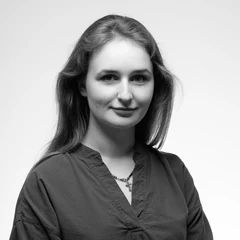
Kseniia Tretiak, orthodontist
Kseniia Tretiak
Orthodontist · paediatric orthodontics
BracesClear aligners Bite correction
  • Graduate of Dnipro Medical University
  • Works according to international orthodontic treatment protocols
  • Treats adults and teenagers: braces, aligners, retention
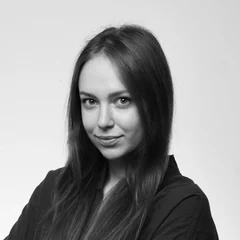
Anastasiia Honcharuk, orthodontist
Anastasiia Honcharuk
Orthodontist · functional orthodontics
Children's orthodonticsBraces Clear aligners
  • Orthodontic residency: modern treatment principles and the basics of diagnostics
  • Course "Microimplants in Orthodontics: Indications and Biomechanics of Tooth Movement"
  • Separate training in paediatric orthodontics
You choose the doctor — at the consultation we'll advise who handles similar cases. Clinic on Instagram ↗
For children and teenagers

Paediatric orthodontics — when to start

6–9 years
First examination
We assess the bite while the bones are still growing. At this stage a lot can be corrected with plates — without braces.
9–12 years
Plates and trainers
Removable appliances that guide jaw growth. Worn mostly at night and at home.
12+ years
Braces
The permanent teeth have erupted — the optimal time for a brace system.
Holidays are the best time to start
The child gets used to the appliance at home, without school and unnecessary stress.
Book a child in for a consultation
Orthodontist consultation — UAH 690: examination, bite diagnostics and treatment plan.
The first examination is at 6–9 years, when the first permanent teeth erupt. This doesn't mean treatment starts immediately: often the doctor simply puts the child under observation. Braces are fitted once the bite has changed to permanent, roughly from age 12.
Fitting is painless. In the first days the appliance feels like pressure, and the child gets used to it in about a week. It may rub the inside of the mouth in the first few days — orthodontic wax is given for this.
Orthodontist consultation — UAH 690. It includes an examination, bite assessment and explanation of options. The cost of the treatment itself depends on the child's age and the type of appliance — it's given after diagnostics.
This is a common situation, and it's not resolved through pressure. Removable appliances are worn mostly at home and at night, so the child is without them at school. If discipline is lacking, the orthodontist may suggest a fixed appliance, which doesn't depend on the child's willingness to wear it.
The main choice

Braces vs Clear aligners

Both methods work. The difference lies in convenience, discipline and the clinical situation. The orthodontist will recommend the best option after an examination.

The classic
Braces
A fixed appliance · bonded to the teeth
from UAH 15,900 / jaw
Advantages
Effective for complex problems
They do not depend on the patient's discipline
Precise control over the movement of each tooth
The more affordable option (metal)
Effective for children
Things to consider
Visible when you talk (metal)
Cleaning around the brackets is harder
Some food restrictions (nuts, toffee)
They may rub the cheek for the first month
When an orthodontist chooses bracesComplex skeletal problems, badly rotated teeth, children's orthodontics, cases where the patient's discipline is in doubt, and situations demanding maximum control
The modern approach
Clear aligners
Removable clear trays · a series of 20+ sets
from UAH 99,000 full course
from UAH 33,000/mo — 3 payments · instalments up to 24 months
Aligners are more expensive than braces: it's an individually made series of 20+ trays, modelled in 3D for your case. The price is tied to the dollar exchange rate and is fixed on the day treatment starts.
Advantages
Almost invisible — they are transparent
You take them out to eat and to brush
The result is modelled in 3D before you start
Fewer visits to the clinic
More comfortable — no metal wires
Things to consider
They must be worn 22 hours a day — discipline is essential
Complex skeletal problems — not always suitable
More expensive than metal braces
Usually not suitable for children under 12
When an orthodontist chooses alignersAdults with moderate bite problems, an active social or professional life, cases where appearance during treatment matters, and patients with good discipline

Not sure which to choose? The orthodontist will tell you after an examination — that decision is theirs, not yours.

Book with an orthodontist →
Want straight teeth but not sure where to start?
Leave your number — we'll call you back within 15 minutes during working hours and book you in for diagnostics. Orthodontist consultation — UAH 690.
12–24
Months, the average
treatment time
3D
The result modelled
before we start
4
Types of braces
at the clinic
6+
Years — when
children should start
Why it matters

Your bite is
more than looks

Most patients come to an orthodontist because they want straight teeth. That is honest and reasonable. But a correct bite is also a matter of health.

A bad bite wears teeth unevenly. It overloads the jaw joints (TMJ). It makes cleaning harder — tartar hides between crooked teeth. It even affects your posture and voice.

Preserving your teethStraight teeth wear evenly. A bad bite means premature wear and chipping.
Easier cleaningCrooked teeth are harder to clean — bacteria gather where the brush cannot reach. Straight teeth mean fewer cavities.
Healthy jointsA faulty occlusion is a common cause of jaw joint pain, clicking and headaches.
ConfidenceA smile you are proud of is no small thing. It shapes how you speak to people and how you see yourself.
When is the best time to start
6–9
First orthodontic check-up
Preventive appliances, bite assessment, early correction
12+
Braces for teenagers
The permanent teeth have come through — the best time for braces
18+
Adults — at any age
Orthodontics has no age limit. Aligners suit adults particularly well
"Braces are not for adults" is a myth
Age is not a contraindication. We treat patients in their forties and beyond. The only difference from teenagers is a slightly longer treatment time.
How treatment works: the path from examination to result
How treatment goes

From the first visit to the result

01
Day 1
Consultation
Examination, photographs, an X-ray or CT scan. The orthodontist makes a diagnosis and proposes a plan
02
1–2 weeks
Preparation
A professional cleaning and any fillings needed. Photographs, impressions or a digital scan
03
Fitting day
Braces / aligners
The braces are bonded on, or the first trays are handed over. The first month is about getting used to them
04
Every 4–8 weeks
Adjustments
The archwire is changed or new trays are issued. The teeth move gradually
05
12–24 months
Braces come off
The appliance is removed, the teeth polished, and a retainer is made
06
Forever
The retention period
The retainer holds the result. Without it the teeth want to drift back
Comparison of systems in the table
A detailed comparison

All the systems side by side

← scroll the table →

Criterion Metal braces Ceramic braces Clear aligners
Price (per jaw)from UAH 15,900from UAH 19,500from UAH 99,000 (exchange rate)
VisibilityNoticeableLess noticeable Almost invisible
RemovableNoNo Yes
Complex problems Yes YesNot always
CleaningHarderHarder As usual
Children's orthodontics Yes YesFrom 14+, with care
Depends on the patientMinimalMinimal! 22 h a day
3D preview before startingPartially availablePartially available Yes
Frequently asked questions

Questions and answers

Bonding them on is painless. For the first three to five days after fitting, and after each adjustment, chewing aches. That is normal — take ordinary ibuprofen if you need to. Most patients get used to braces within two to four weeks.
Entirely normal. We treat patients between 25 and 45. Age is not a contraindication. The only difference is that adult bone is denser, so treatment may take a little longer. The result is the same.
The braces themselves do not stain teeth. Yellowing comes from poor cleaning around the brackets, where plaque builds up. The answer is an irrigator, interdental brushes and regular professional cleaning. We show every patient how to brush properly with braces.
Twenty-two hours a day is the key requirement. Wear them less and the teeth do not move to plan, and treatment drags on. Most patients take them out only to eat and brush — one or two hours. The rest of the time they are in. If self-discipline is doubtful, braces are the better choice.
Without a retainer, yes — it is called relapse. A retainer (fixed or removable) is a mandatory part of orthodontic treatment. A fixed retainer is bonded to the inner surface of the teeth and is not felt at all.
No, it is not too early. The first orthodontic check-up is recommended between six and nine. At that stage bite problems can be spotted and corrected with simple appliances, while the bones are still growing and respond far more easily.
Usually from 12 to 24 months. Mild crowding in the smile zone is corrected faster, while pronounced bite abnormalities take more time. The timeframe depends on the extent of tooth movement, not the type of appliance: braces and aligners work for roughly the same length of time in the same situation. The orthodontist gives the exact timeframe after diagnostics.
Orthodontic treatment at Houston starts from UAH 15,900 per jaw. The exact price depends on the system (braces or aligners) and the complexity of the case; we set it at the consultation after the diagnosis.
Brush after every meal — at least twice a day. Use interdental brushes to clean between the teeth and under the wires. An irrigator is the best helper with braces. A professional cleaning every three to four months is essential.
Hard things: whole nuts, rusks, bones, boiled sweets. Sticky things: toffee, chewing gum, crisps. Cut apples and carrots into pieces rather than biting them. Soft food is unrestricted. The rule is simple: do not let food pull a bracket off.
Yes — ordinary sport is unrestricted. For contact martial arts you need a protective mouthguard worn over the braces (available in sports shops). Swimming is fine. Wrestling and boxing without protection put both the braces and your teeth at risk.
Not always. Extractions (usually the first premolars) are only prescribed for severe crowding or protrusion. Modern orthodontics avoids extractions wherever possible. The orthodontist decides after studying the radiographs and impressions.
At normal conversational distance they are practically invisible. In photographs they show if you look closely. "Invisible" is marketing hyperbole, but "almost unnoticeable" is true. Most people never realise you are wearing them.
Yes, and that is often the correct order: orthodontics first, to create the right space for the implant, then the implant. Placing an implant before orthodontics is risky, because an implant does not move with the teeth. We plan the whole treatment in advance.

Want to know which option is yours?

Book with an orthodontist — they will assess your situation and tell you which method you need and how long it will take.

The clinic's Telegram bot
Cashback bonuses
for every treatment
Bonuses are credited automatically after every visit
Use the bonuses you collect towards part of your treatment
Current offers and discounts — for bot subscribers only
 Activate bonuses →
Free · takes 30 seconds
Free enquiry

Book with an orthodontist

Leave your details — we usually call back within 15 minutes during working hours

Telegram
✓ Thank you! We have received your request — the doctor will call you shortly.
Book via Telegram