Dental treatment under a microscope: why it is needed and when it saves a tooth
 A dental microscope magnifies the working field 20 to 25 times and delivers bright light exactly where it is needed. It turns treatment from something done almost blind into precise work under direct vision — and often makes it possible to save a tooth that would otherwise be condemned. At the Houston clinic all restorative work is performed exclusively under a microscope, with no exceptions.
What the microscope gives, and why it is fundamental
A tooth's canals are fine, branching passages, sometimes less than a tenth of a millimetre across. It is impossible to see them all with the naked eye, or even with ordinary loupes. A microscope gives the doctor two things at once: high magnification and directed light. That reveals what usually stays hidden:
- extra and hard-to-reach canals that are easily missed;
- the border between healthy and diseased tissue — so that only the diseased part is removed and as much of your own tooth as possible is kept;
- micro-cracks, which determine whether the tooth can be saved at all;
- how well old fillings and crowns are seated.
When a microscope saves a tooth
There are situations where the prognosis is far worse without magnification, and where a microscope saves the tooth:
- Root canal retreatment. If the canals were not fully treated before and inflammation has developed beneath the tooth, a microscope allows the old material to be removed carefully, the missed canals to be found, and the tooth to be retreated rather than extracted.
- Hidden anatomy. Curved, narrow or extra canals in difficult teeth.
- A broken instrument in the canal. A small fragment that can often be retrieved under magnification.
- Perforations and cracks. The microscope lets them be found and assessed — and a considered decision taken.
- Deep decay close to the nerve. Removing the diseased dentine precisely improves the chance of keeping the tooth alive.
Retreatment — a second chance for the tooth
"Root canal retreatment" usually means one thing: the tooth has been treated before and is troubling you again, or the X-ray shows inflammation near the root. That is not a reason to extract it straight away. In most cases the tooth can be retreated: under the microscope the doctor opens the canals, removes the old material, cleans them and seals the canal system afresh. Difficult cases are diagnosed with a 3D scan (CT), which is where fine canals and cracks show up.
Why all treatment at Houston is done under a microscope
Cavity treatment, cosmetic restoration and endodontics at the clinic are all done under magnification. It is the standard, not a paid extra. The approach raises precision, lowers the risk of having to redo the work, and preserves more of your own tooth. There is more on the pages about microscope treatment, endodontics and restorative dentistry.
Advice for patients: how not to lose a tooth
A few practical pointers that genuinely help save a tooth and avoid paying twice:
- Do not delay if a tooth hurts or has darkened after root canal treatment. The sooner retreatment begins, the better the chance of keeping the tooth.
- Before agreeing to extract a "hopeless" tooth, ask about retreatment under a microscope. A second opinion and a 3D scan often change the plan.
- Ask for a CT (3D) scan, not just an ordinary X-ray. Fine canals, cracks and hidden inflammation show up only on that.
- Check that endodontics is actually done under a microscope, not merely with loupes — they are different levels of precision.
- After root canal treatment, do not put off the permanent restoration or crown. A "dead" tooth without solid cover cracks easily.
- Do not ignore mild discomfort under an old filling or crown. Often it is early, hidden inflammation around the root.
What is not worth doing: do not warm an aching tooth, do not prescribe yourself antibiotics just in case, and do not wait for it to pass — the pain may quieten while the inflammation stays and destroys the bone around the root.
The doctor's view
"The microscope is not marketing for us, it is the working standard. Patients often arrive with a tooth someone else has told them to extract — and under magnification we find a missed canal, or old material that can be removed so the tooth can be retreated. Your own tooth is almost always better than any prosthesis, however expensive. So we look first for a way to keep it, relying on diagnosis and evidence rather than guesswork. If you have been told the tooth must simply come out, that is a reason to get a second opinion with a CT scan, not a reason to hurry."
— Dmytro Kobozev, head doctor and restorative dentist
Frequently asked questions
Does treating a tooth under a microscope hurt?
No. Treatment is done under local anaesthetic, exactly as comfortable as usual. The microscope adds no pain; on the contrary, it makes the work more precise and gentler, because the doctor sees every step.
How much does treatment under a microscope cost?
Endodontics (root canal treatment and retreatment) under a microscope starts from UAH 7,100. The exact figure depends on the number of canals and the complexity of the case, and is given after an examination and an X-ray.
Is a microscope always necessary?
At the Houston clinic all restorative work is done under a microscope, without exception. It is especially critical in endodontics, in retreatment, and where the tooth's anatomy is complex — cases in which a mistake costs the tooth.
Can a tooth I have been told to extract be saved?
Often, yes. Retreatment under a microscope gives a tooth a second chance even in difficult cases. The final answer comes from an examination and a 3D (CT) scan, which show whether the tooth can be kept.
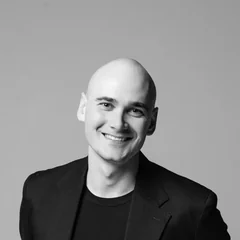
Graduated from Dnipro Medical University in 2013. Restorative work, endodontics and cosmetic restoration under a microscope. An evidence-based approach and the maximum preservation of the patient's own teeth.
Doctor's profile →All articles by this doctor →Clinic on Instagram ↗Saving the tooth is realistic
If you have been told the tooth must simply come out, or an already-treated tooth is troubling you, book a consultation with a microscope and 3D imaging. Booking, questions and reminders all live in the clinic's Telegram bot.
Or book by phone 067 478 88 78
Book a consultation
Under the microscope the doctor will assess whether the tooth can be saved and draw up a treatment plan.
Book now